
On October 1, 2020, after the extension caused by the state of alarm, the new Technical Building Code, approved in the last days of 2019, came into force.
What is it?
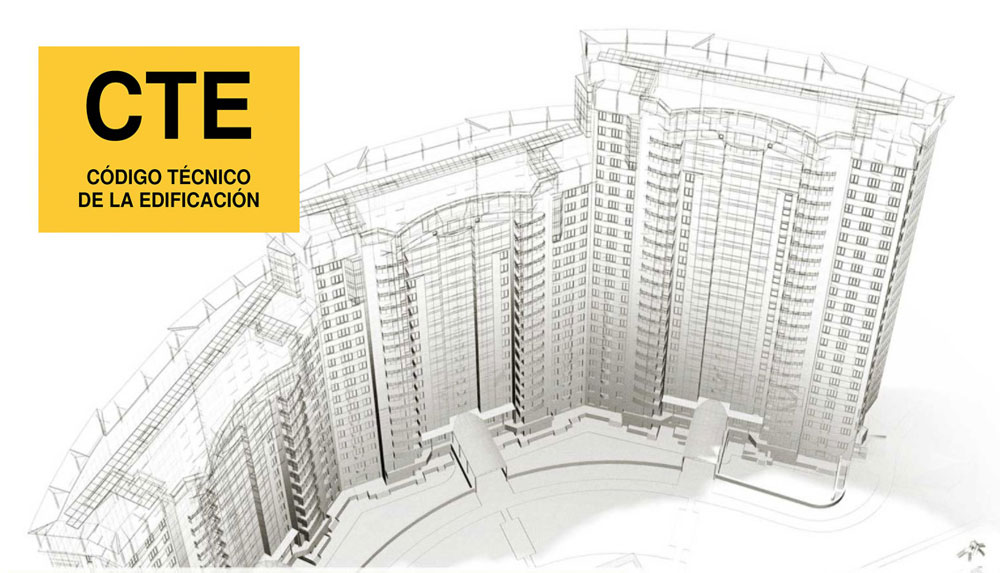
The Technical Building Code or TBC is the set of root regulations that establish the technical-legislative framework of safety and habitability in which buildings must be built, having been updated in December 2019 (http://www.sergioplaza.es /406-entry-into-force-code). It is a standard of basic and general requirements that must be complied with when constructing habitable buildings so that they are built with safe and quality materials.
Its requirements and directives include all phases of a building project: from the definition and documentation itself, through the construction of the building itself, to its subsequent maintenance and conservation.
It is a regulation based on performance, since it dictates the essential requirements of a buildable construction and is divided into several basic documents, which identify the quality requirements in terms of safety that buildings and their habitability must meet: structural safety, safety against fires, safety of use, health, protection against noise and energy saving.
Its context
Architects, builders and engineers must adhere to this updated code mainly due to the new materials that have appeared, the changes in European regulations on sustainability and other new technical-legislative aspects that were not contemplated in the 2006 TBC.
Until 1977, it was the Ministry of Housing that regulated all aspects of construction in Spain (MV Standards). That same year, Royal Decree 1650/1977 on building regulations was published, for the organization of the Basic Building Standards (NBE).
It was not until 1999 that the next Building Planning Regulation (LOE) was approved, which established the complete organization of the building and its regulations, already applying the first European guidelines and advice. This LOE required the creation of a new Technical Building Code for its development.
After several modifications, in 2006, Royal Decree 314/2006 was approved, by which the Technical Building Code comes into force and the previous NBE are repealed. All regulations applicable to building that were not included in the NBE were replaced by complete ones in the new and first TBC.
The state of health of the buildings and the Periodic Technical Inspection or PTI

Based on a visual inspection carried out by specialized technicians such as architects, building engineers or surveyors, a technical report is drawn up that determines the state of the common elements of the building and the deficiencies revealed regarding tightness, structure and habitability that could cause situations risk to people’s safety. If the building does not pass the Periodic Technical inspection, it will have to be rehabilitated as soon as possible. This report is sent to the registry of the relevant Official College, a copy is given to the community and registered in the town hall.
The PTI helps to keep the building in optimal safety conditions, thereby extending the life of the building, avoiding material damage or physical risks to people and guaranteeing the safety and habitability of the building.
VISENDUM®. Personal Security: Phisical and Legal
Safety is the most important thing. That is why VISENDUM® cares about your safety and that of your clients, thus avoiding uncomfortable physical mishaps and cumbersome legal claims. This is possible, since our products do not contain PVC, aldehydes, or silicates present in the rice husk, so they do not harbor holes that allow decomposing waters.
As at VISENDUM® we fully comply with both the Technical Building Code and the rest of the national and European regulations, it will not be necessary, for example, to close a hotel or a campsite if the client slips. Likewise, in this sense, clients with pacemakers will avoid risks when using VISENDUM®, because the presence of less than 30% HDPE, the lowest on the market, allows static electricity to not be generated. Safety, therefore, is maximum when applying VISENDUM®, a material that does not twist, turn gray, or crack and has the advantage of providing up to 25 years of warranty.
For your safety and that of yours, trust VISENDUM®, a reference with proven experience over the years, in the manufacture of Engineered Wood for outdoors.
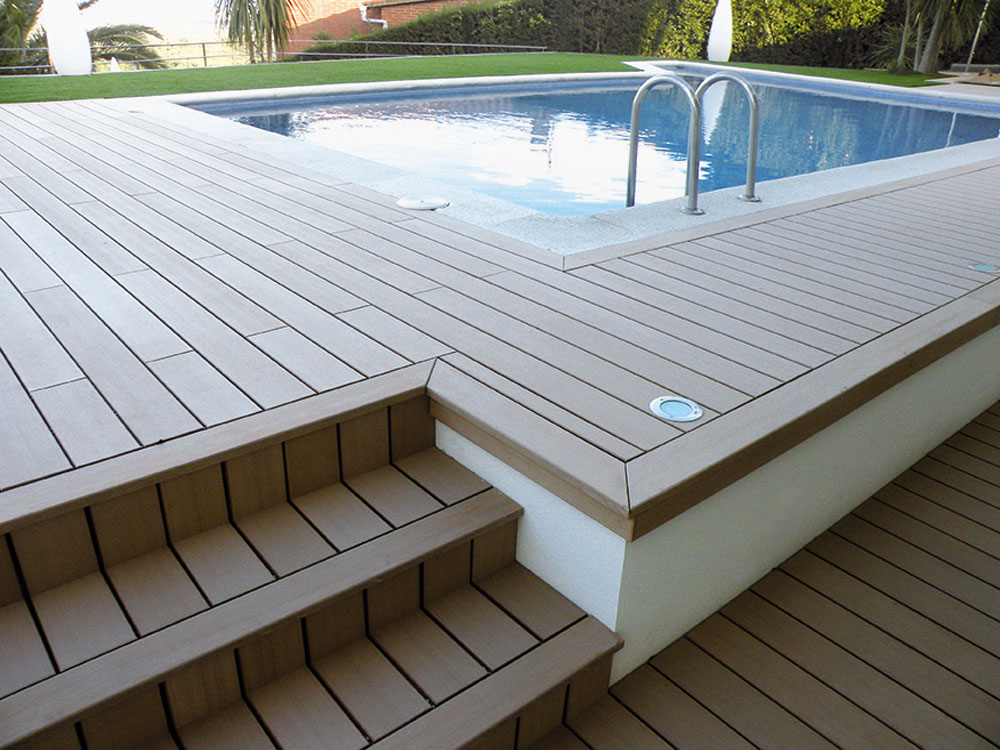
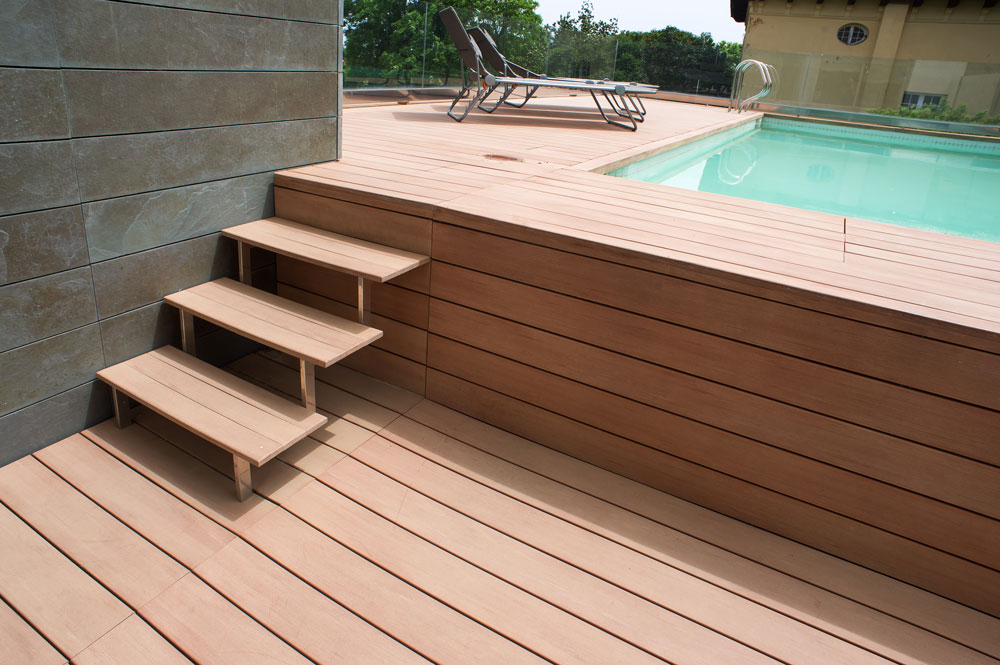
Anti-slip, according to TBC
VISENDUM® Engineered Wood provides physical security to users, legal security to institutions and promoters because it certifies slip resistance according to TBC.
TECHNICAL BUILDING CODE (TBC) DB-SUA/1 for outdoors DB-SUA/1. It must comply with the European test UNE 41901: 2017 EXT to determine the value of Slip Resistance. Minimum requirement Rd>45 class 3 |
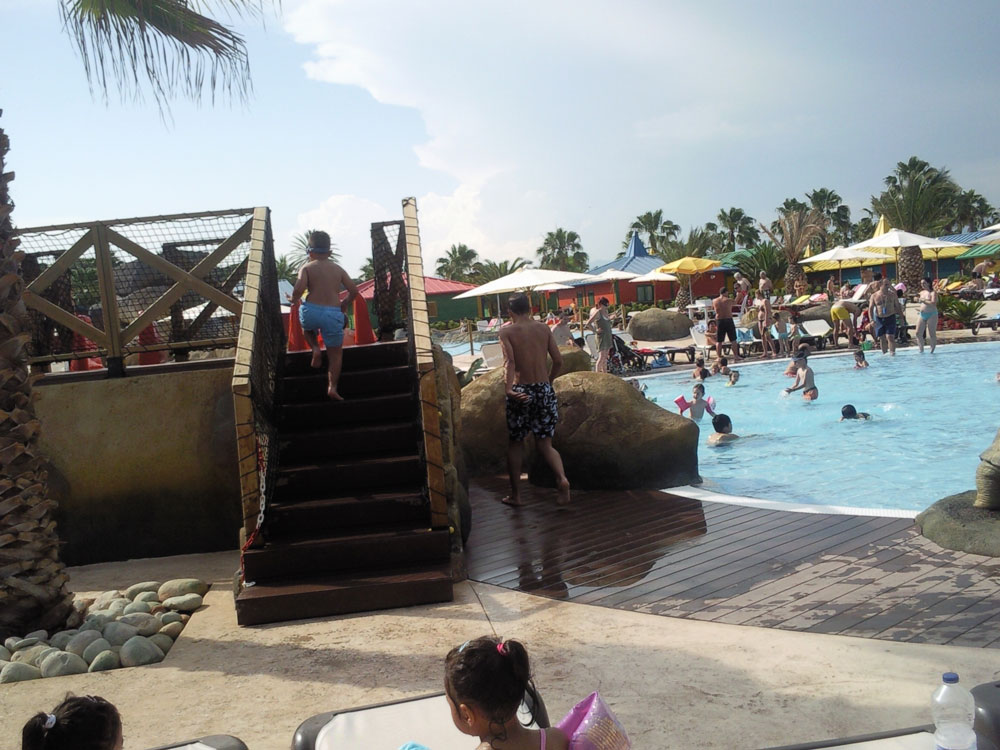
VISENDUM® Engineered Wood passes the slip test according to the European test UNE 41901: 2017 EXT, which makes it suitable for outdoor installation, with a classification higher than Rd>45 Class: 3.
TECHNICAL BUILDING CODE (TBC) DA DB-SUA/3, wet floors. DB-SUA/3.1. test on wet ground of users with FOOTWEAR, on an inclined plane DIN 51130. Minimum CTE requirement: R11. |
VISENDUM® Technological Platform® obtains a classification higher than R11: in the longitudinal direction of the table R12 and in the transverse direction R13.
TECHNICAL BUILDING CODE (TBC) DA DB-SUA/3, wet floors. DB-SUA/3.2 test on wet floor of users with BAREFOOT feet on an inclined plane DIN 51097. Minimum CTE requirement: class B |
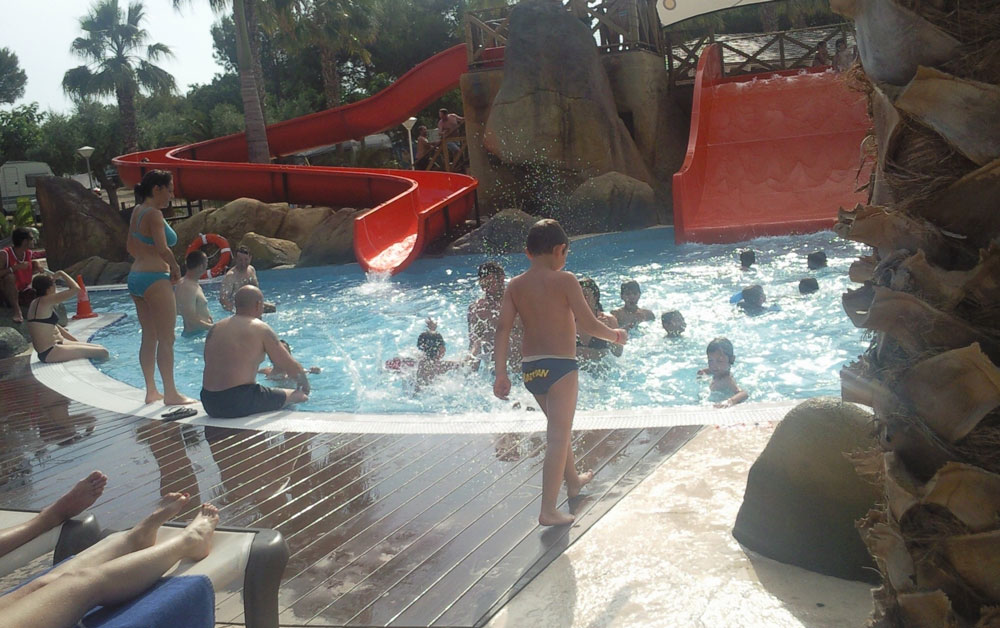
VISENDUM® Engineered Wood obtains a Class C classification, higher than class B.
Click here to see Law 38/1999, of November 5, on Building Planning directly from the BOE.

https://www.boe.es/eli/es/l/1999/11/05/38
Click here to see Royal Decree 732/2019, of December 20, directly from the BOE, which modifies the Technical Building Code, approved by Royal Decree 314/2006, of March 17.
https://www.boe.es/eli/es/rd/2019/12/20/732
